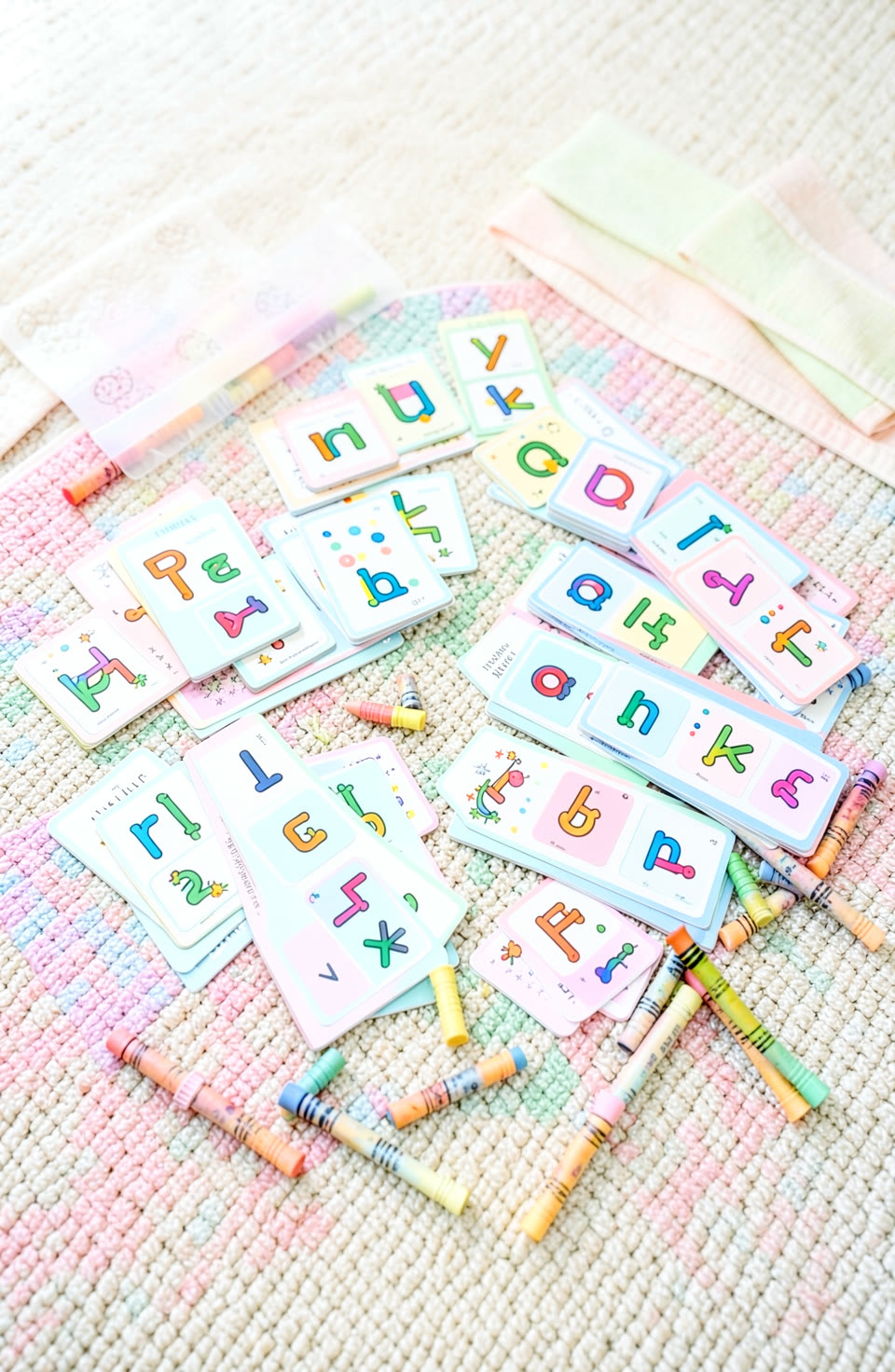

Alphabet games at home can be a great way to help young children learn letters in a playful setting. These activities require nothing more than time and imagination. You’ll find easy-to-play ideas that are perfect for parents and caregivers.
Use Everyday Items
Look around your home for objects that begin with each letter of the alphabet. For example, a banana starts with B, and a cup starts with C. Encourage your child to name items as you go through the alphabet. This helps them associate letters with real-world things. You can make it more fun by taking turns or racing to find items first.
Alphabet Scavenger Hunt
Turn your home into an alphabet scavenger hunt. Write down one letter for each day and ask your child to find something that starts with that letter. This activity helps reinforce letter recognition while making learning feel like a game. You can also use photos or drawings of objects to make it more visual.
Letter Sounds Game
Play a simple game where you say the name of an object, and your child has to guess which letter it starts with. For example, if you say “dog,” they should say “D. ” This helps them connect sounds with letters. You can also use picture cards or objects around the house to make it more interactive.
Alphabet Chant
Make up a simple chant using the alphabet and sing it together. Start with A for apple, B for ball, and so on. You can add hand motions or movements to each letter to keep things lively. This helps children remember letters through rhythm and repetition. Keep it short and fun to maintain their interest.
Letter Tracing With Paper
Use paper and a pencil to trace the alphabet together. Start with large, simple shapes so your child can easily follow along. You can use different colors or add stickers for extra fun. This helps them get familiar with how letters look and feel. Make sure to praise their effort rather than focus on perfection.
Frequently asked questions
Are there any apps that help with letter learning?
There is one app in development called Milo ABC: Phonics & Tracing, which uses spoken instructions and no ads or timers. It’s designed for young learners who need a calm, focused environment to learn letters.
How can I make the games more engaging?
Keep things simple and fun by using items they already know and love. Adding movement, music, or a game-like structure makes learning feel less like work and more like play.
What if my child gets frustrated?
Let them take their time without pressure. Focus on the process rather than getting every letter right. Celebrate small successes to keep them motivated and happy.
Alphabet games at home are a great way to make learning feel natural and enjoyable. If you’re looking for an app that supports these activities, Milo ABC: Phonics & Tracing is currently in development and designed with young learners in mind.
More from AstroForged