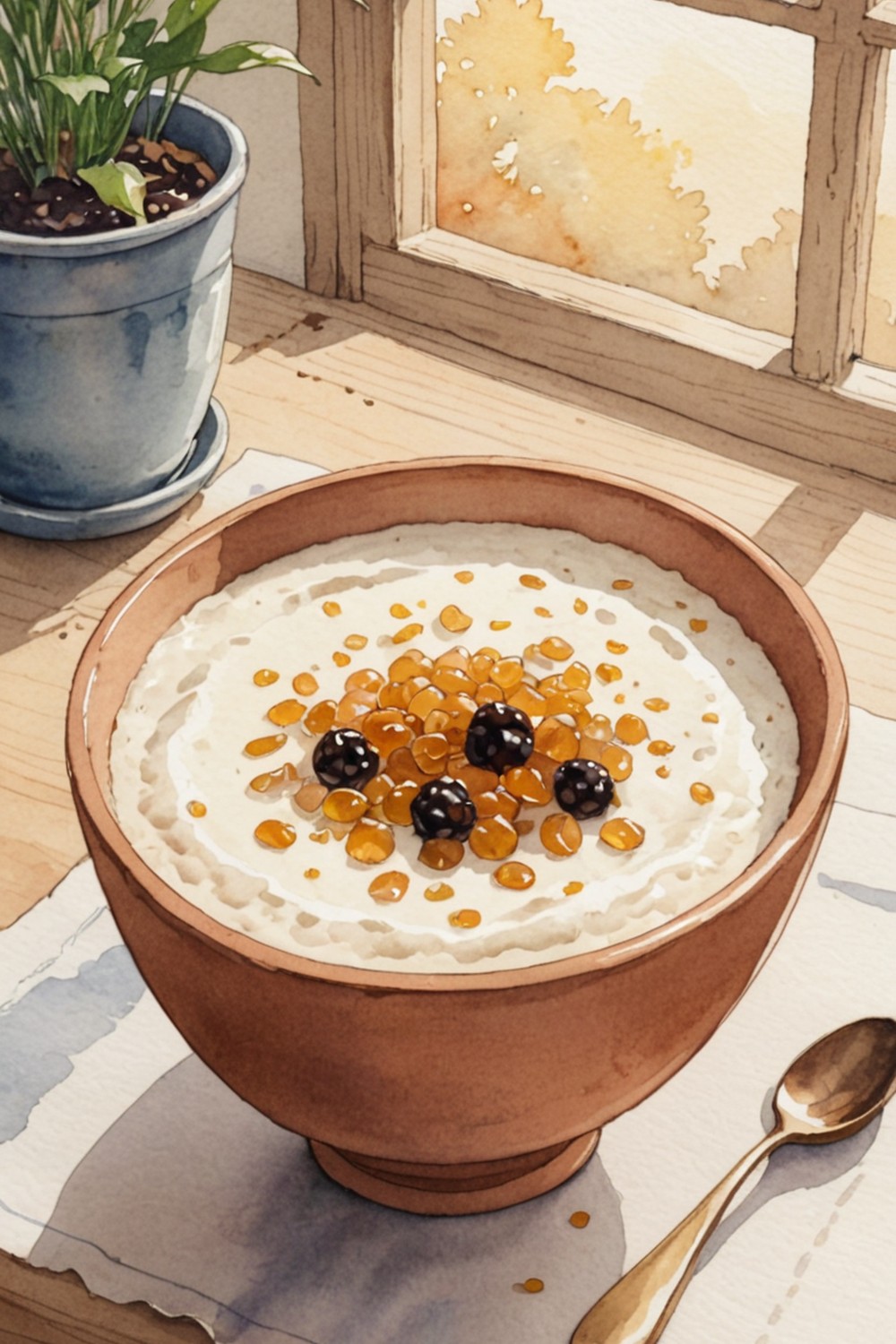
Banarsi kheer is a rich, slow-simmered rice pudding from Varanasi, flavoured with cardamom and saffron and topped with nuts. It's easy, takes about 30 minutes and serves six, so it works as a weeknight treat or for a festive table. The tips below will help you avoid a thin or scorched pan and end up with a creamy, fragrant bowl.
Ingredients
- 1 kg milk
- 1/2 cup rice
- 15 almonds
- 15 raisins
- 3 cardamom
Method
- without covering rice and milk high the micro for 20 minutes.
- now, for 5 minutes high the micro at 50% power. remove from micro and grind with a laddle so that the rice breaks.
- add the raisins n almonds.
- cool it.add the cardamom.
- cool it and serve.
What makes Banarsi kheer different
Varanasi, also called Banaras, has a long love of milk sweets, and its kheer tends to be on the rich side. The milk is simmered down until it turns creamy and slightly golden. The flavourings are kept gentle so the milk is still what you taste most.
Every household has its own version. Some add more saffron, some more nuts, and some a handful of chironji seeds. Treat the recipe on this page as a reliable base and use the tips here to make it your own.
Getting the creamy texture right
Use full-fat milk. Semi-skimmed works, but the kheer comes out thinner, and you lose the gentle caramel flavour that whole milk develops as it reduces.
Choose a wide, heavy-based pan. The wide surface helps the milk reduce faster, and a thick base spreads the heat so the milk is less likely to catch.
Rinse the rice until the water runs clearer, then soak it for 15 to 20 minutes while the milk heats. Soaked grains soften faster and release their starch evenly, and that starch is what thickens the kheer.
Stir often, and scrape the bottom and corners of the pan with a flat spatula rather than a round spoon. If anything starts to stick, turn the heat down straight away and don't scrape the browned layer into the pudding.
Add the sugar only once the rice is completely soft, because sugar can stop the grains softening. Take the pan off the heat while the kheer still looks a little looser than you want, because it thickens a lot as it cools.
Small touches that lift the flavour
Soak the saffron before you add it. Crumble the strands into a tablespoon of warm milk and leave them for ten minutes. This gives a deeper colour and spreads the flavour more evenly than stirring dry strands into the pan.
Grind cardamom fresh. Split the pods, grind the seeds with a pinch of sugar in a pestle and mortar, and add them near the end so the scent stays strong. Ready-ground cardamom loses its fragrance quickly.
Toast the nuts. A minute or two in a dry pan, or in a teaspoon of ghee, brings out the flavour of almonds, cashews and pistachios. Save some for the top so every spoonful has a bit of crunch.
If you like a floral note, a few drops of rose water stirred in off the heat is plenty. Too much can taste soapy, so add a little, taste, and add more only if you want it.
Easy swaps for what's in your cupboard
No basmati? Any short or medium-grain rice works. Many homes use broken rice because it cooks down so well. You can also use leftover cooked rice; just simmer it for less time.
To use jaggery instead of white sugar, let the kheer cool for a few minutes first, then stir it in. Adding jaggery to boiling milk can make it split.
To make it without dairy, full-fat coconut milk gives the richest result and oat milk gives a milder one. Plant milks reduce differently, so check the texture often and expect a slightly different flavour.
No saffron? Leave it out. The kheer will be paler but still lovely with cardamom and nuts. If you'd rather skip nuts, use toasted seeds or just a dusting of cardamom on top.
If you've got milk and rice to use up midweek and aren't sure what else they could make, CookIt asks what you have, never how much. It then shows which recipes you can make now, which are one ingredient away and which are two away.
Serving ideas
Banarsi kheer is lovely warm on a cold evening and just as good chilled on a hot day. Spoon it into small bowls or earthenware cups and top with slivered pistachios, a few saffron strands and a pinch of crushed cardamom.
It's a natural way to finish a festive meal and goes well with warm puris. For something fresher, top each bowl with diced mango or pomegranate seeds just before serving.
The recipe serves six, so it's easy to halve for a smaller household or double for a gathering. If you double it, use a wider pan rather than a deeper one so the milk still reduces in good time.
Storing and reheating
Cool the kheer quickly, then cover it and put it in the fridge. Eat it within two to three days, and don't leave it at room temperature for more than a couple of hours.
To stop a skin forming, press a piece of baking paper directly onto the surface before chilling.
Kheer firms up in the fridge. Loosen it with a splash of milk, either cold for a chilled bowl or gently warmed over a low heat while you stir. Freezing isn't ideal, as the rice can turn grainy once thawed.
Frequently asked questions
Can I make Banarsi kheer a day ahead?
Yes. It often tastes better the next day once the flavours have had time to blend. Keep it covered in the fridge and stir in a little milk before serving if it has thickened.
Why did my kheer curdle?
Usually it's because jaggery or something acidic went into very hot milk, or the milk was close to its use-by date. Use fresh milk, keep the heat moderate and add jaggery only after the kheer has cooled slightly.
How do I fix kheer that's too thin or too thick?
If it's thin, simmer it for a few more minutes, remembering that it will thicken as it cools. If it's too thick, stir in warm milk a little at a time until it runs slowly off a spoon.
Banarsi kheer just needs some patience and regular stirring, and after making it a couple of times you'll know exactly how you like it. To find more meals that use what's already in your kitchen, try CookIt, which needs no account and no sign-up.
More from AstroForged