Detective deduction games depend on the moment when scattered details finally fit together. The Quiet Carriage gives that moment its own place: a real deduction board where you pin clues together. This guide covers how the board works, how to move cards around to suit the way you think, and how to use it well in the opening chapters without spoiling anything.
Why the board matters on the 21. 50 sleeper
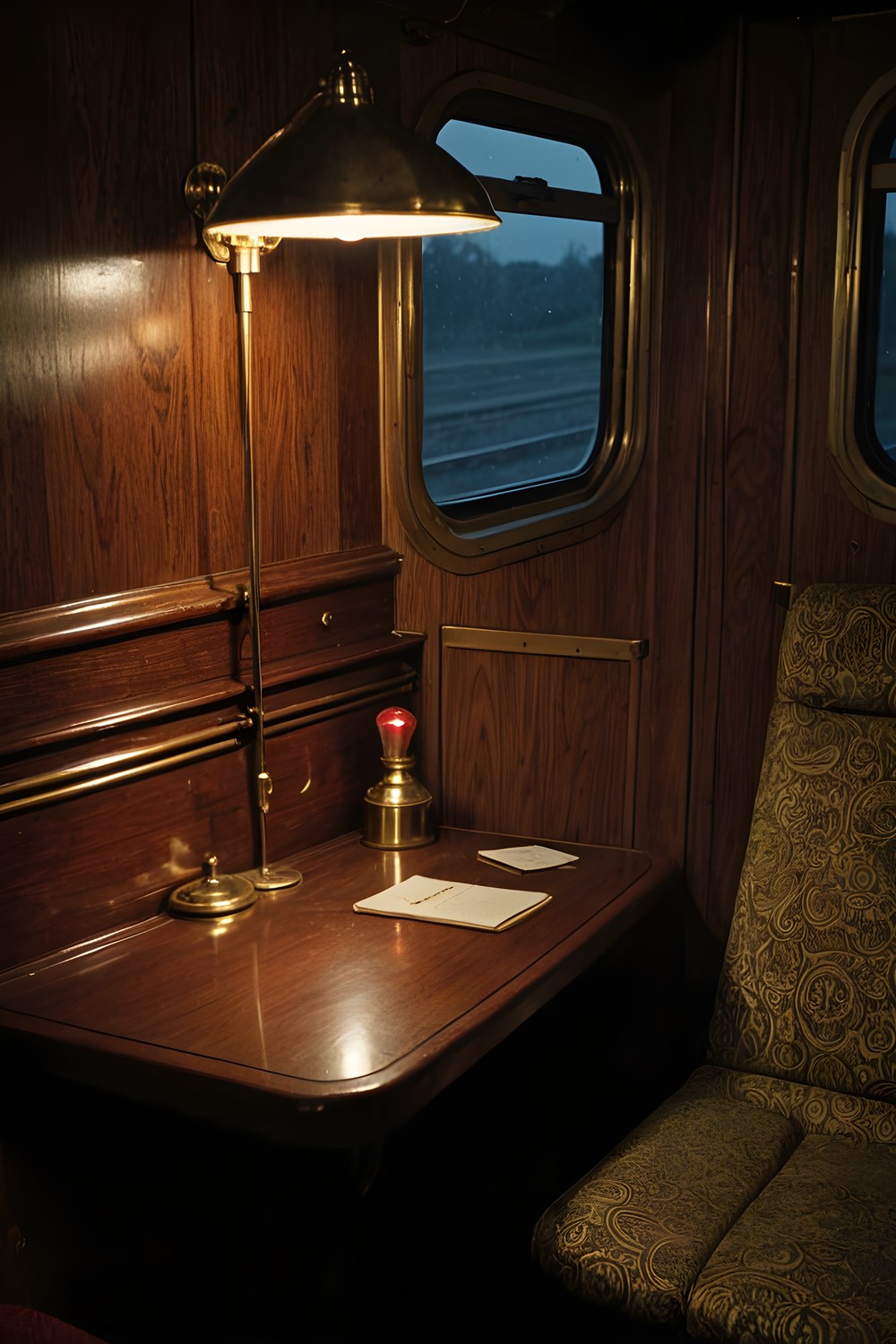
The Quiet Carriage opens at 02:35. You wake in Compartment 7 of Coach C, in a berth you never booked, under a coat that is not yours. It is March 1974, you are aboard the 21. 50 sleeper, and the train will not stop.
You spend most of your time searching each coach for the objects on your list. The board is where those finds start to mean something. Searching gives you the pieces, and the board is where you work out how they fit.
The board is a quiet, unhurried space. There is no music, by design, only the sound of the train. Working on the board feels a little like sitting with your notes in a rocking compartment while the wheels keep time.
Pinning clues together
The main action is simple. You pin clues together on the board to show how they connect. It lets you set out a line of thought without writing anything down.
Read carefully before you pin. The game keeps a narrated journal, and every line is voiced and subtitled. If you missed something, open the journal page again and use “Hear this page” to listen to it a second time.
Pay attention to how documents look as well as what they say. Different people in the game write in different hands, and printed items such as tickets are properly typeset. A change in handwriting is worth keeping in mind when you decide which clues belong together.
If tilted handwriting is hard to read, turn on Readable font in Settings. It switches every document to a clearer typeface, so you can focus on what a note says instead of decoding it.
Dragging cards to arrange your thinking
You can rearrange the cards on the board. Drag a card by its body to move it, and the game remembers where you put it. The layout you build is still there when you come back.
This makes the board a working surface, not a fixed display. Here are a few ways to arrange it.
Sort by place. Keep anything from Compartment 7 in one area, anything from the Coach C corridor in another, and anything from the Coach B corridor in a third. When a link crosses between areas, it stands out.
Sort by time. You have one firm time from the very start: you woke at 02:35. Line cards up from earlier to later around that point, and gaps become easier to spot.
Keep a “not sure yet” corner. Cards you can’t place can wait there until something new shows where they belong.
Spoiler-light examples from the opening
The first two chapters keep you in Compartment 7, the Coach C corridor and the Coach B corridor. Listing the exact cards would give the puzzles away, so this section covers how to approach the opening instead.
Start with what you know for certain: the time you woke, the compartment and coach you woke in, the berth you never booked and the coat that is not yours. These are your fixed points. Test anything you find nearby against them. Does it explain one of them, or does it make one stranger?
The object list works as a queue. It shows up to six names in a fixed order (five in Coach B), and each name you find is replaced by the next one. New material reaches you a piece at a time, which gives you a steady rhythm for rearranging the board as you go.
Don't try to build the whole picture at once. Early on, a tidy board with a few confident links is more useful than a crowded one.
When you get stuck
The hint always knows the next step, whether that is an object, a door, a key to use or a thread to pull. If you are going in circles on the board, a hint can show you which thread to pull next.
Hints recharge in 60 seconds on Casual and 180 seconds on Expert. That is the only difference between the two difficulties, so choose the pace of help that suits you.
Mistakes while searching cost nothing. Tapping the wrong thing, or an object that is not on the list yet, brings no penalty and no score. Locked doors still give you a line when you try them, so no tap goes unanswered.
Settings that make searching and reading easier
Highlight interactables draws a frame around every object currently on your list. Object silhouettes puts each listed object’s cut-out shape next to its name. Double-tap to zoom 2×, or pinch to zoom up to 2. 5×. The list fades out while you are zoomed in, so you can see the floor underneath it.
Readable font switches the interface and every document, handwriting included, to Atkinson Hyperlegible, and it straightens tilted handwritten lines. Subtitles are always on. The picture gently sways with the rails, and Settings → Reduce motion turns that off.
Frequently asked questions
Will the game keep my board layout?
Yes. When you drag a card by its body to a new spot, the game remembers where you put it.
Does Expert difficulty make the deduction board harder?
The only difference between Casual and Expert is how fast the hint recharges: 60 seconds on Casual and 180 seconds on Expert.
Is The Quiet Carriage a good fit if I like detective deduction games but prefer a calm pace?
It is built for slow, atmospheric play. There is no music by design, only the sound of the train. Subtitles are always on.
The board rewards patience: pin what you are sure of, and move the rest around until it settles. The Quiet Carriage is live on Google Play now, ready for your next late-night journey.
More from AstroForged