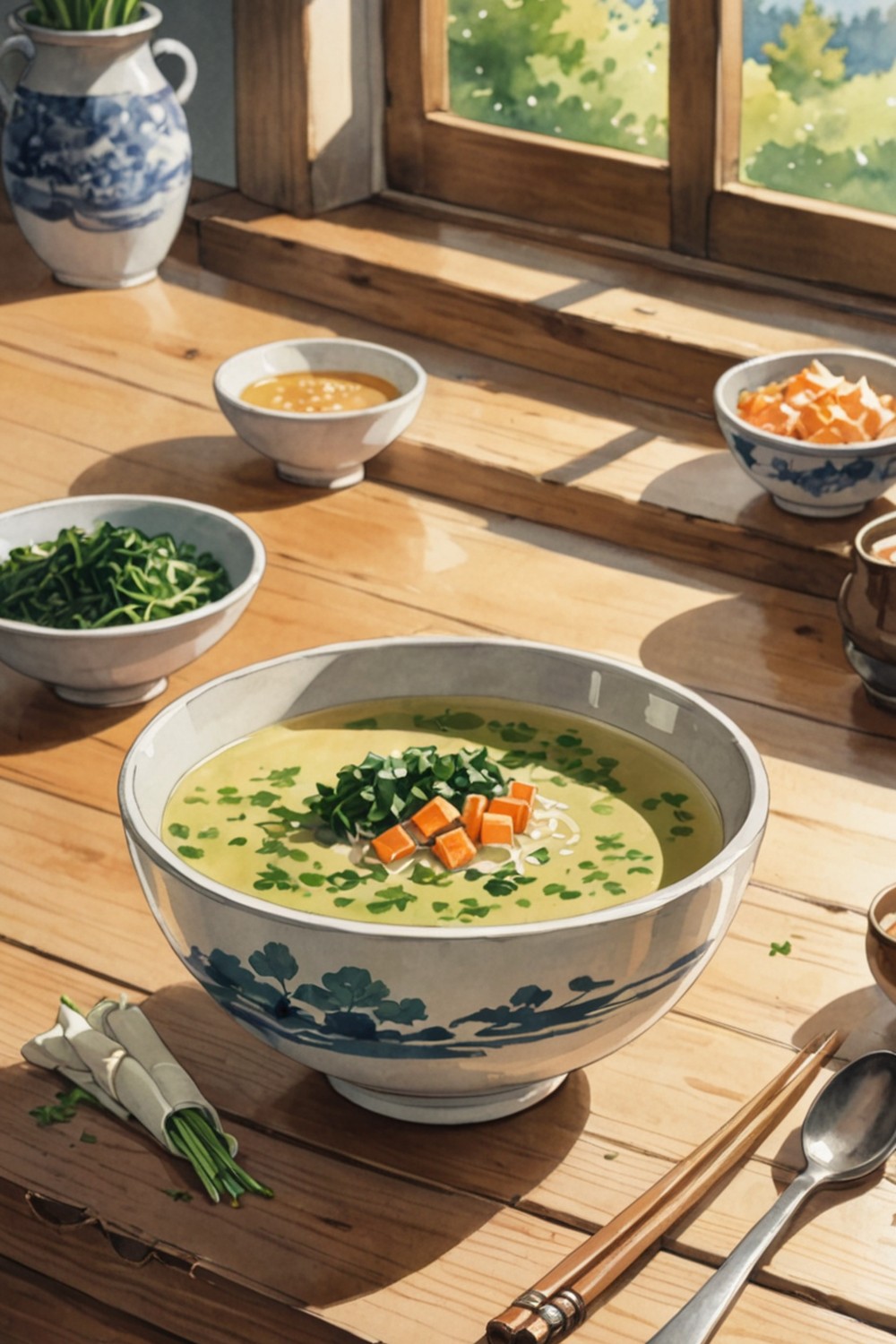

A good basic miso soup is one of the most forgiving things you can cook at home: a light broth, a spoonful of miso and whatever vegetables need using up. This version is easy, takes about 30 minutes and serves four, and it is meant to be changed to suit you. Below are the small habits that make the biggest difference, plus swaps, add-ins, serving ideas and how to store it.
Ingredients
- 3 teaspoons wakame seaweed or 1 teaspoon wakame seaweed, flakes
- 4 cups water
- 1/2 cup onion, thinly sliced
- 1/2 cup carrot, diced
- 1 1/2 tablespoons mugi miso (OR 1 1/2 Tbsp plus 1/2 tsp Hacho, Genmai or Shiro Miso)
- 3 tablespoons green onions, finely sliced
Method
- Rinse wakame; soak in cold water to cover for 5 minutes and dice, or if using flakes, add directly.
- Bring water to a boil. Add onions and wakame; simmer 3 minutes.
- Add the carrots and simmer 5 more minutes; reduce heat to very low.
- Add miso and simmer 2 minutes (do not boil after adding miso). Garnish with green onions.
- Optional Ingredients: fresh or dried tofu, shiitake mushrooms, leafy greens, daikon, lotus root, leeks, round or root vegetables, cooked noodles or grains.
The one rule: don't boil the miso
Miso is a fermented paste, and much of its aroma is delicate. If you boil the soup after the miso goes in, the flavour turns flat and the texture can go slightly grainy. The fix is simple: cook everything else in the broth first, then take the pan off the heat before you add the miso.
To stop it clumping, put the miso in a ladle or small bowl, add a splash of the hot broth and stir until smooth. Then stir that back into the pan. A small whisk or fork does the job nicely.
Taste before you add more. Brands vary a lot in saltiness, so it is easier to add another teaspoon than to rescue a soup that has gone too salty. If it does, a little more hot water or broth will bring it back.
Building a better broth
The broth is where a basic miso soup gets its depth. In Japanese cooking this is usually dashi, and you don't need anything fancy to make a simple version. A piece of kombu (dried kelp) soaked in cold water for half an hour, then gently warmed and removed before it boils, gives a clean, savoury base that suits vegetarians.
Dried shiitake are another good route. Soak them in warm water until soft, slice the caps for the soup, and use the soaking liquid as part of your broth. Pour it through a fine sieve or a piece of kitchen paper first, as it often holds a little grit at the bottom.
If you eat fish, a handful of bonito flakes steeped in the warm kombu water and then strained gives the classic smoky flavour. And if you have none of these to hand, plain water still works. The miso carries plenty of flavour on its own; the soup will simply be lighter.
Choosing your miso
White miso is mild and slightly sweet, which makes it a gentle place to start. Red miso is aged longer and tastes deeper and saltier, so use a little less. Mixed miso sits between the two and is a sensible all-rounder if you only want one tub in the fridge.
Once opened, keep miso sealed in the fridge. Pressing a piece of baking paper or clingfilm onto the surface helps stop it drying out. It keeps well, so one tub will see you through many bowls of soup and plenty of marinades and dressings besides.
Always check the label if you are cooking for someone with dietary needs. Miso is made from soya, and some varieties also contain barley or other grains.
Add-ins and swaps to make it your own
The method suggests lots of add-ins, and this is where the soup becomes yours. Spinach, shiitake mushrooms and extra spring onions make a lovely combination. The trick is timing: firm vegetables such as thinly sliced carrot, daikon or potato go into the broth first, while soft greens like spinach or pak choi need only a minute at the end.
Tofu is traditional. Silken tofu is soft and delicate, so cut it into cubes and slide it in gently near the end. Firm tofu holds its shape better if you prefer more bite. Dried wakame seaweed swells a great deal in liquid, so start with a small pinch.
This is also a good home for odds and ends: half a bag of spinach, the last few mushrooms, a lonely spring onion. If you often have bits like these and aren't sure what else they could become, CookIt asks what you have, never how much, and sorts recipes into ones you can make now, one away and two away.
Serving ideas
In Japan, miso soup is commonly served alongside steamed rice and a few pickles, including at breakfast. It also works well as a light starter before a stir-fry or a rice bowl.
To turn it into a fuller meal, add cooked udon or soba noodles, a soft-boiled egg, or extra tofu. A few drops of toasted sesame oil, a scattering of sesame seeds or a pinch of chilli flakes on top just before serving adds warmth and colour. Keep a little raw spring onion back to sprinkle over each bowl for freshness.
Storing and reheating
Miso soup tastes best freshly made, but leftovers are fine for a day or two in a covered container in the fridge. Reheat gently over a low heat and stop as soon as it is steaming, so the miso isn't boiled.
If you want to cook ahead, make the broth and cook the firmer vegetables, then cool and chill it without the miso. When you're ready to eat, warm it through, add any greens and tofu, and stir in the miso off the heat. The broth on its own freezes well; tofu and leafy greens are better added fresh, as freezing makes them spongy or limp.
Frequently asked questions
Can I make basic miso soup without fish?
Yes. Use a kombu broth, the strained soaking water from dried shiitake, or a mix of both. Plain water works too; the soup will just be lighter in flavour.
Why is my miso soup cloudy or separated?
That is normal. Miso doesn't fully dissolve, so it settles as the soup stands. Give it a gentle stir before serving and it will come back together.
How much miso should I use?
Follow the recipe as a starting point, then adjust to taste, as saltiness varies between brands and types. Add extra a teaspoon at a time, always loosened with a little broth first and stirred in off the heat.
Once you have made it a couple of times, you will stop measuring and start tasting, which is exactly how a good bowl of miso soup should be made. If you'd like more ideas for the ingredients already in your kitchen, CookIt helps you cook with what you have, with no account and no sign-up.
More from AstroForged