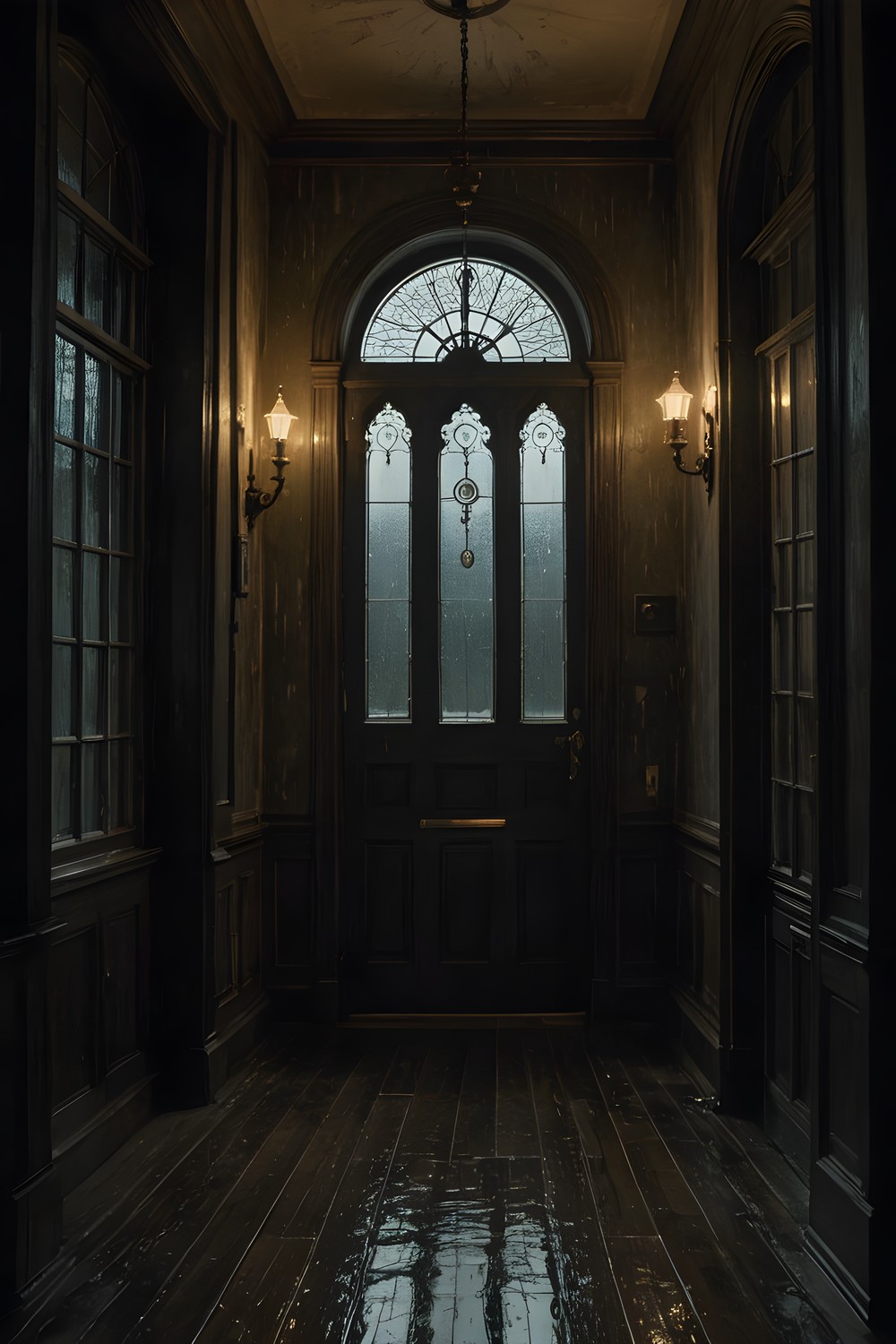

If you look for cozy mystery games to fill a quiet evening, you probably want something slow and atmospheric that is kind to a tired mind. Ninefold Hidden Object Mystery is built around that idea: nine rooms, eight who stayed, and no music at all, only rain, clocks and the low hum of room tone. Here is an honest picture of what it feels like to play, so you can judge whether it suits your night in.
The sound of a quiet house
The first thing most players notice about Ninefold is what is missing. There is no music anywhere in the game, and that is deliberate. You hear room tone, weather, clocks and narration, and nothing else.
The effect is closer to sitting in an old house on a wet night than to playing a game with a soundtrack. The rain and the ticking clocks set the pace, and the silence between them leaves space to think. If you like to play with headphones in a dim room, this is where the game is at its best.
The story is told by one narrator throughout. In the interest of honesty, that voice is generated with a local text-to-speech model, and the game's art is AI-assisted too. Every sound effect and font is credited on the in-game Credits screen. Subtitles are always on, so you never need the audio to follow what is happening.
Slow, careful searching
Each scene is shown whole rather than cropped. On a typical 16:9 phone you will see dark margins at the sides, which means nothing can hide off-screen. You can zoom in up to 3×, and panning stops at the edges of the image, so you never lose your place in the room.
Every room holds sixteen hidden objects, but the list only shows six names at a time. As you find one, the next name slides in from a fixed order. It keeps the list short and calm, and stops a room from feeling like a wall of tasks.
Tapping something that is not on the list simply does nothing. There is no penalty for a wrong tap, no score to lose and nothing ticking down. There are no timers, no energy to wait out and no purchases, so you can stop and stare at a corner for as long as you like.
Storms, lamplight and comfort settings
Weather is part of the mood. Each room has two versions of its artwork, one in normal light and one lit by a lightning flash, and during storms the game swaps between them rather than simply brightening the picture. Lamps flicker gently in the scenes as well.
If movement or flashing bothers you, Reduce motion is honoured throughout. Crossfades drop to zero, the animation when you find an object shortens from 0. 9 seconds to 0. 35 seconds, and the lamp flicker stops.
Two other options change how searching feels. Highlight interactables draws a frame around every listed object, and Object silhouettes places each object's shape beside its name in the list. Both are worth trying if your eyes are tired at the end of the day.
When you get stuck
The hint button is designed so it never leaves you stranded. It works through a priority list: an open puzzle first, then an object in the current room (easiest first), then a hotspot, then a thread on the deduction board, then an item combination, and finally the way to the nearest room that still has work left.
Hints recharge over time, shown as a ring filling around the button. On Casual that takes 60 seconds, and on Expert it takes 180 seconds. If you want a truly relaxed evening, Casual keeps help close at hand.
Thinking it through: items and the deduction board
Some objects you find become inventory items. You use them by dragging them onto the scene, and the drop has to land inside the right spot. Taps are forgiving, with a small tolerance, but drops are not, so take a moment to place items carefully.
The deduction board is a real board, not a checklist. You connect cards with thread to work out what happened. If a connection is wrong, the thread simply falls with a slack-string sound and you can try again. You can also rearrange the cards however you like, and your layout is saved with the game.
Your first evening: the Gates, the Entrance Hall and the Nursery
Chapter 1 takes you through the Gates and into the Entrance Hall, and Chapter 2 brings you to the Nursery. That is a comfortable amount for a first evening.
In the Nursery, the five easiest objects are the bear, the winding key, the drum, the train and the marble, so they are a gentle place to begin. Three Nursery objects are also inventory items: the winding key, the candle stub and a broken key whose shaft has snapped clean off. Hold on to that one.
Look out for one small, quiet moment. Chalk writing appears in the Nursery only after you have found all sixteen objects, and the game draws your attention to the fact that it was not there before.
When you are ready to stop, just stop. There are three save slots, each saving automatically, and Continue on the title screen picks up the most recently played unfinished game.
Frequently asked questions
Does Ninefold have any music?
No. The game has no music by design. You hear room tone, rain and weather, clocks and a single narrator, which gives it a still, late-evening feel.
Can I play offline and stop whenever I like?
Yes. The game is fully offline with no network code at all. There are no timers, no energy and no purchases, and three autosaving slots mean you can put it down at any point.
Is it suitable if I find small objects hard to spot?
It has several helpful options. You can zoom up to 3×, turn on Highlight interactables or Object silhouettes, and use hints that recharge in 60 seconds on Casual. Wrong taps carry no penalty.
If your idea of a good evening is the sound of rain, a ticking clock and a room that gives up its secrets slowly, Ninefold is worth your time. Begin at the Gates, take it gently, and let the quiet do the rest.
More from AstroForged