Many parents want to track reading progress, but checklists and quizzes can quietly turn reading into a test. You can notice real growth with a few calm habits instead. This guide shows you how to do it without comparing your child to anyone else.
Why pressure gets in the way
Young children notice more than we think. If every story time ends with a quiz, a child can start to feel watched. Reading then becomes something to get right instead of something to enjoy.
Pressure often shows up in small habits, like asking a child to read for visitors, correcting every word, or saying 'You knew this yesterday. ' Each one is well meant. Together, they can teach a child to hide their mistakes.
Calm tracking works the other way. You watch quietly, write a little down, and keep reading time itself warm and easy.
Compare your child only to their past self
Every child learns to read on their own timeline. Some pick up letters early and words later. Others seem stuck for weeks, then jump ahead all at once.
That is why the most useful comparison is your child today versus your child a few months ago. A cousin, a classmate or a sibling tells you very little about where your child is headed.
When other parents share milestones, it's okay to smile and let it pass. Your notes are about your child, not a race.
Simple ways to keep a record
You don't need a chart to track progress. A plain notebook kept near the bookshelf works well. Once a week or so, jot down one or two things you noticed.
Keep notes short and specific. 'Pointed to the M on the cereal box and said it was for Mom' is more useful than 'doing well. ' Specific notes are easier to look back on, and they bring back real moments.
Save a few drawings or writing samples each month and put the date on the back. A small folder of these gives you a clear picture of growth over a season.
Some families also take a short video of their child with a favorite book every few months. Seeing an old clip next to a new one can be a lovely surprise for both of you.
The quiet signs worth noticing
Progress is not only about reading words on a page. Early signs often come first, and they are easy to miss.
Look for things like holding a book the right way up, turning pages one at a time, or pretending to read a familiar story. Spotting letters from their own name on signs counts. So does asking, 'What does that say? ' or retelling a story in their own words.
Later signs include guessing a word from the picture and then checking the letters, rereading a sentence that didn't make sense, or picking up a book without being asked.
Each of these shows a child building the habits that reading needs. Write them down. They count.
Writing counts as progress too
Reading and writing grow together. When a child forms letters, they are also learning to look closely at letter shapes.
Watch how a letter is made, not only how it looks at the end. A child who starts a letter at the right spot and moves in the right direction is building a habit that makes writing easier later.
If your child is left-handed, let them find a comfortable grip and paper angle. Their letters may look different at first, and that's fine.
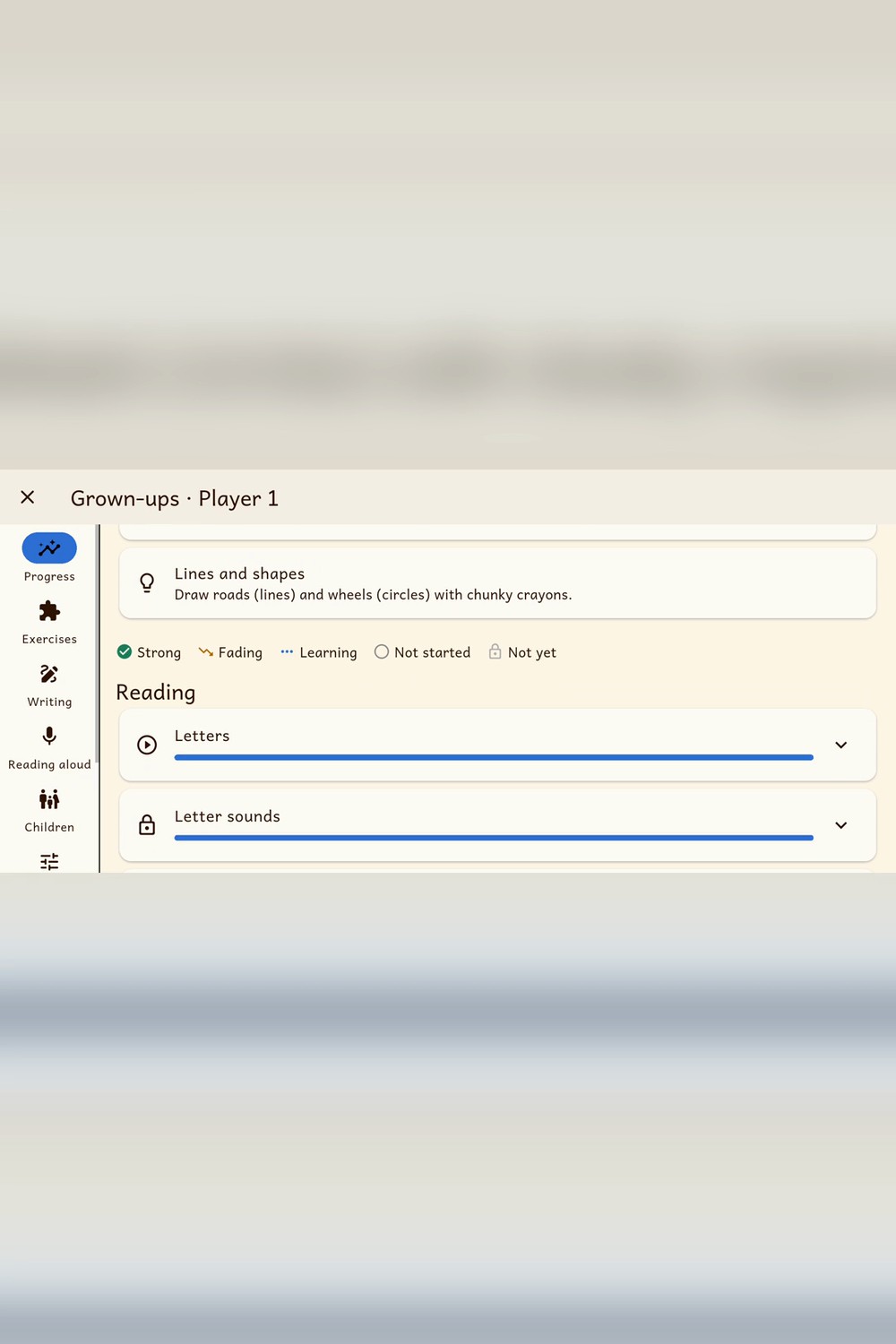
If you'd like extra help with letter practice, Milo Learn, our app, checks stroke order as your child traces, not just the finished shape. It works offline, has no ads, no accounts and no tracking, keeps everything on the device, and includes a left-handed mode.
What to do on slow weeks
Every child has weeks when nothing seems to change. This is normal. Often a child is taking in more than they show.
On slow weeks, step back. Read aloud to them more and ask them to read less. Return to old favorite books they can already manage. An easy win builds confidence for harder books later.
Then look back through your notebook. Seeing how much has already changed can ease your own worry, and children can tell when the grown-ups around them feel relaxed.
Frequently asked questions
How often should I check on my child's reading?
There's no set rule. A quick note once a week and a look back once a month is plenty for most families. Keep the checking in your notebook, not in the middle of story time.
What if my child seems behind other kids?
Try to set comparisons aside and look at your own notes over time. If you are still worried, talk with your child's teacher or doctor. They can help you decide whether anything needs a closer look.
Should my child know I'm keeping track?
It can help if you share it in a positive way. Showing a child an old drawing next to a new one lets them see their own growth. Avoid using your notes to point out what they can't do yet.
Calm tracking is mostly about paying attention and writing down what you see. If you'd like gentle help with letter writing at home, Milo Learn offers stroke-order checks, works fully offline, and has no ads.
More from AstroForged