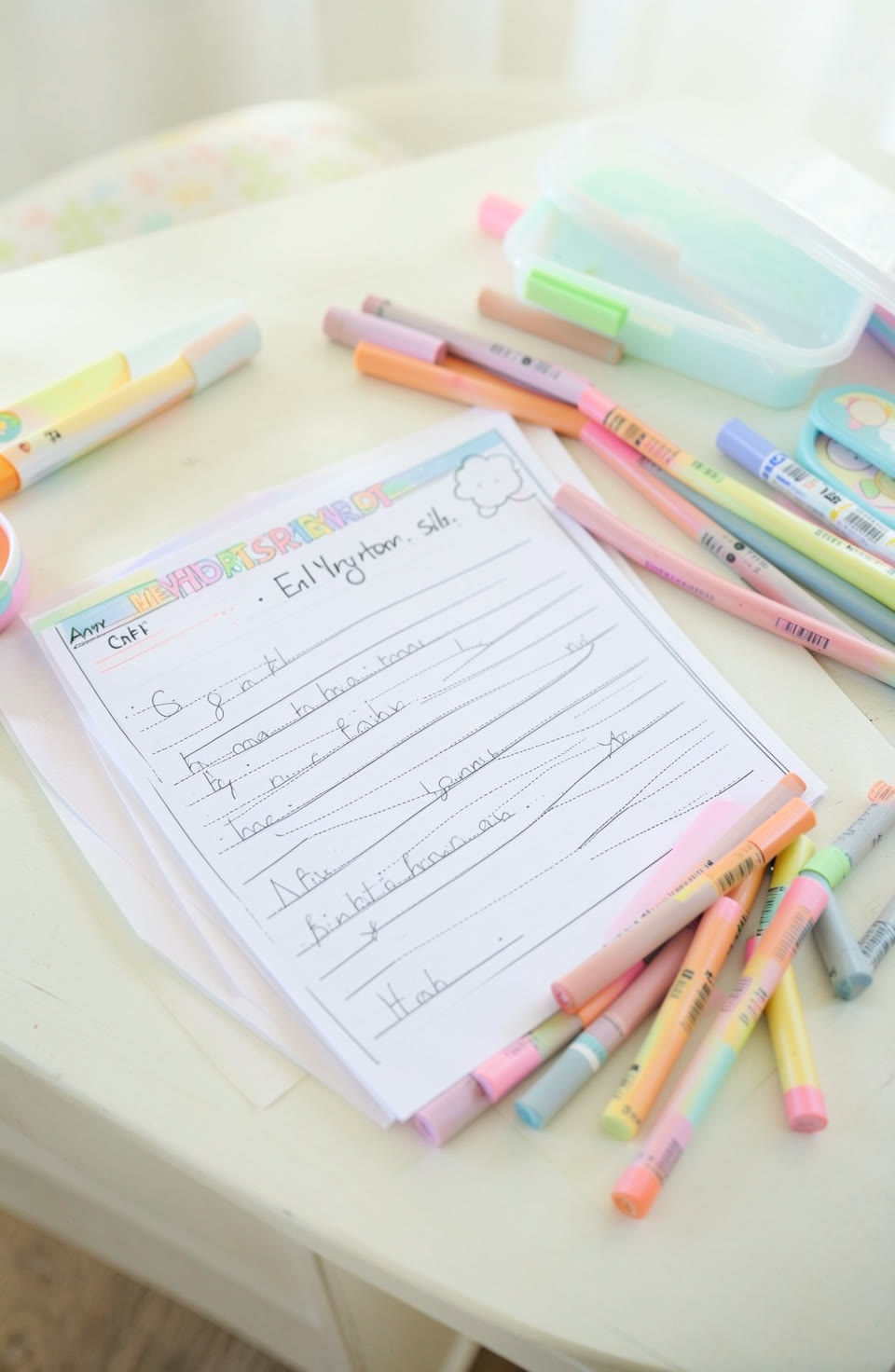

Starting letter tracing is an important part of early learning. Here are tips to help your child develop the right skills for success.
Start With A Comfortable Position
Before beginning any tracing activity, make sure your child is sitting in a comfortable position. Their feet should be flat on the floor and their back straight. This helps them focus better and avoid unnecessary strain. Sit at eye level so you can watch their hand movements without making them feel watched.
Use A Proper Grip
Teach your child to hold the writing tool correctly. A good grip means they can move their hand smoothly without tiring quickly. Encourage a “pencil grip” where the thumb and index finger are near the top of the pencil, with the other fingers curled around. Practice this by holding the pencil together as you trace a letter.
Keep The Pace Gentle
Let your child work at their own pace. Rushing can lead to frustration and bad habits. Allow time for them to think about each line they are making. If they make a mistake, gently remind them to start again without rushing or correcting too quickly.
Use Tracing Paper And Pencils
Provide tracing paper and pencils that are easy for small hands to hold. The paper should be thick enough so the pencil doesn’t sink in too much, but not so thick it feels stiff. If your child is struggling with grip, try using a thicker pencil or one with an ergonomic shape.
Focus On Accuracy Over Speed
It’s important to focus on making each letter correctly rather than how fast they can do it. Mistakes are part of learning and should be seen as opportunities for improvement. Use praise to encourage them when they complete a letter well, even if it takes time.
Frequently asked questions
How long should tracing sessions last?
Keep sessions short, around 10 to 15 minutes. Young children have shorter attention spans and benefit from frequent breaks.
What if my child is struggling with a particular letter?
Repeat the letter several times and use visual aids like flashcards or drawings. Let them practice at their own pace without pressure.
Can I use any kind of paper for tracing?
Use thick, smooth paper that is easy to write on. Avoid shiny or textured surfaces that can make tracing more difficult.
Practicing letter tracing with the right tools and techniques helps build confidence in young learners. The Milo ABC app offers a safe and encouraging environment for this kind of practice.
More from AstroForged